 platoseedplatoseed
Foundation models to automate x-ray analysis for radiologists
Mecha Health builds foundation models to automate x-ray analysis for radiologists. We take medical images and process them using proprietary models to produce accurate draft medical reports. Our first model was built in less than two months, and beat Microsoft, Google, and OpenAI on clinical accuracy metrics. On top of that, it’s two orders of magnitude smaller and trained with a quarter of the data. We are partnering with the largest privately owned radiology practice in the US and a multinational tele-radiology company to provide them with their own foundation model, enabling their radiologists to go from reading 1 scan per hour to 1 scan every 5 minutes. By charging on a per scan basis, x-ray report generation represents a 40B+ market opportunity.
Mecha Health builds foundation models for radiology that generate complete radiology reports from medical images in seconds. Their system aims to streamline reporting, improve accuracy, and integrate seamlessly into radiology workflows within healthcare systems.
A zero-touch ingestion pipeline accepts DICOM/HL7/FHIR data, analyzes images with multi-anatomy and multi-modality models to produce editable draft radiology reports, and delivers structured outputs via PACS integration with optional PDF. It emphasizes sub-2s ingest, automated draft reports, clinical-grade accuracy, and end-to-end workflow integration (HIPAA/SOC 2 compliant, on-premise or cloud).
Who it’s for: Radiology practices, healthcare systems, and enterprise medical imaging departments seeking automated, workflow-integrated radiology reporting.
Seed funding raised ($4.1M) with involvement from Y Combinator and other investors; claims production-ready deployments, enterprise-grade infrastructure, and real-time performance claims.

Medical doctor @Imperial, where I gained entry to the most competitive deanery in the country. Microsoft PhD scholar in machine learning @UCL - I have more than 20 peer reviewed publications in medicine, digital healthcare, and machine learning - including first author publications in top AI venues such as ICLR. 360+ citations on google scholar. Ex Research Scientist at the Center for Artificial Intelligence @AstraZeneca. Building the future of automated radiology @Mecha Health.
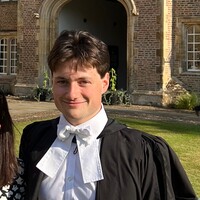
Mathematics (BA) and Physics (MSc) graduate from the University of Cambridge, ranking top 30 in the university. British Physics Olympiad participant, ranking in the top 11 in the UK. Former ML interpretability research scholar (MATS), where I was the first in the world to use Sparse Autoencoders on vision models. My research has been cited by Anthropic and Google DeepMind. Currently working on building state of the art radiology report generation AI in a way that is interpretable and safe.

I am a Machine Learning & Medical Imaging PhD candidate from University College London (UCL). During my PhD I published work at tier-one Machine Learning venues (NeurIPS, ICML & ICLR), and was invited to present my work at international medical imaging conferences, Digitas, & Harvard Medical School. Before this startup I was poached by my Professors from UCL including the Head of Computer Science to be CEO for their spin-out. Currently building Radiology 3.0 by Automating reporting.
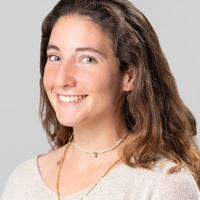
Solving the interpretive moment in radiology. ex-ML Engineer across multiple medical device startups, with experience in FDA and CE marked medical devices, as well as LLM safety in healthcare. My PhD in Medical Imaging (UCL) focussed on surgical vision; my work has been patented, cited 100+ times, and published across the world's highest impact scientific venues (Nature, NeurIPS, ICLR).
Automated analysis of medical images that is accurate and interpretable.
Mecha Health builds AI that generates draft radiology reports from medical images, tracing each finding to its visual source for interpretable, evidence-backed reporting. The product targets radiologists and healthcare providers to reduce reporting delays and clinician burnout by speeding up and clarifying the reporting process.

Copilot for radiologists

Cancer screening without barriers