 platoseedplatoseed
Monitoring and learning layer for long-running agents
BentoLabs is the monitoring and learning layer for long-running agents. We detect when agents silently fail or drift from the user's goal, system prompt, or tool contracts, show affected users and root cause, and suggest the prompt, skill, or harness fix. As more teams deploy agents, keeping them reliable in production becomes mission-critical. Bento sits directly in the production loop and gives teams the operational leverage required to scale agent ecosystems without scaling human firefighting alongside them. The result is a system that turns opaque agents into agents that can be monitored, debugged, and improved continuously. The founders learned this problem at Emergent (YC S24), where they built and operated production coding agents used by 5M+ users. Abhinav was hire #1 and helped Emergent hit SWE-Bench #1 and scale from $0 to $100M ARR in just 8 months. Kaushik was hire #2, led full-stack engineering at Emergent, and was key to building the infrastructure that made production agents reliable, observable, and debuggable. Bento's self-learning engine has also lifted ARC-AGI-3 (internal) by 2.6x and Terminal-Bench 2.0 (internal) from 42.2% to 52.4% pass@1 with the same model, tools, and budget.
BentoLabs AI provides a self-learning production infrastructure for AI agents, enabling monitoring, regression detection, and automatic improvement of agent behavior across production runs. It emphasizes OpenTelemetry-native traces, plain-English alerts, and a closed-loop system for shipping self-improving agents.
The platform collects OpenTelemetry-native traces from all frameworks, analyzes regressions, and surfaces plain-English alerts and incident groups. It allows describing failure modes, training signals on traces, and backfilling history to show when issues began. It offers artifacts (skills, subagents, tools) as trigger-based fixes, a living memory of learned outcomes (The Book), evaluations across releases (offline, CI, live traffic), and versioned changes for traceability. Users can jump to specific spans, manage incidents, and attribute regressions to prompts, skills, or model changes. Everything is designed to enable continuous improvement of agentic systems in production.
Who it’s for: Teams building and operating AI agents in production, including engineering and ML teams at enterprises that need reliable, self-improving agent behavior.
Founding/early traction signals with YC backing mentioned in the site copy; active product-focused content, blog updates, and availability for demos, indicating early-to-growth stage. No explicit funding amount shown beyond YC reference.
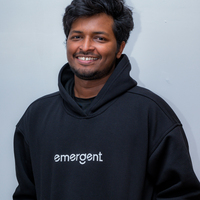
Engineer, founder, and builder. I've taken products from 0→1 across AI, SaaS, and analytics. Most recently, I was a Founding Engineer at Emergent Labs (YC24), where I helped scale the product from launch to $100M ARR in under 8 months — one of the fastest-growing AI startups in India. Before that, I co-founded Sporty (metaverse) and TheProductArtists, and led engineering at Paz Care. I've been writing code professionally since 2017.

Previously- Hire #1 at Emergent (YC S24). Abhinav led the Agents team, helping scale from $0 to $100M ARR in just 8 months and hit #1 on SWE-Bench, twice. Unofficially he was called ‘the agent whisperer’. He built BentoLabs after realizing that for Agents whatever he couldn't see it wouldn't get fixed. And the current monitoring tools were not delivering the value they promised. So he built the layer that actually finds the silent failure, fixes them and closes the loop.
Get model-jump-sized gains without changing the model: Your agents learn from every production failure
BentoLabs AI monitors long-running AI agents for production failures and enables agents to retain learnings across runs rather than rediscovering solutions. The platform detects silent failures, tracks recurring edge cases, and automatically applies fixes to subsequent agent executions.
▲ 80

Datadog for Agent Reliability

Armature helps companies monitor and optimize the agent experience.